Leesa Reserve Review 2026: The GreenFlex BioFoam Rebuild
Leesa rebuilt its flagship hybrid around a plant-based foam this summer. The Reserve you can buy today isn't the mattress most reviews are describing. Join me in exploring the new Reserve.
It cradles like memory foam and never lets you sink past the support. It's also slow. A bed for settling into, not for shifting around on.
TopDown ReviewsOne Firmness, One Inch Shorter, New GreenFlex BioFoam
The Leesa Reserve is the brand's flagship hybrid, made with West Elm, and this summer it became a different mattress. Leesa rebuilt it around GreenFlex BioFoam, a plant-based foam the company now makes in-house. The bed lost an inch of height along the way, and it lost its soft and firm options. What ships today is 13 inches tall and comes in one firmness: medium. Several of the reviews still sitting on the first page of Google describe a 14-inch mattress available in three. That version is gone.
After two weeks of testing the mattress, I sink in at the shoulder and hip and then stop. No other foam bed I've slept on does that. Directly beneath the 1.5 inches of GreenFlex sits a thin band of micro-springs, up to 2,756 of them. They seem to be what catches me. Soft foam on its own keeps compressing until you're effectively lying on whatever sits underneath it. Here the foam gives, something pushes back, and the sink ends at a fixed depth. Soft and supportive stop being a trade.
Dense foam takes a moment to come back when you move, and there's very little bounce in this bed. If you change position all night, or you want spring underneath you, notice that in the first couple of weeks rather than at the end of the trial.
I run hot in bed. It's the thing that wakes me up on a bad mattress, and a bed carrying this much dense foam is normally where that happens. This one's kept me cool. Leesa built against the problem deliberately: five graphite strips under the quilt to pull heat off the surface, an open-cell foam meant to vent instead of trap, two spring layers keeping air moving through the middle. Two weeks in August isn't a summer, and I'll report back.
A queen was $2,769 at last check, down from a $3,699 list price. That's a lot of money, enough that the bed deserves the whole 120 nights rather than a hopeful first week. The money buys density: 139 pounds of mattress in a queen, two independent spring systems, and a limited lifetime warranty behind a build meant to resist the sag that finishes cheaper foam beds. Whether that's worth it depends entirely on how long you keep a mattress.
Why We Love It
- Soft at the surface without going soft underneath you
- Kept me cool, and I run hot in bed
- Zoned coils, reinforced under the hips where the weight actually goes
- GreenFlex BioFoam verified under the USDA BioPreferred Program, not self-declared
- The plant-based foam is the layer you lie on, not a token layer in the base
- CertiPUR-US, GREENGUARD Gold, fiberglass-free
- 120 nights to decide, and a limited lifetime warranty
Considerations
- A queen lists at $3,699, and even on sale it costs more than most hybrids
- Very little bounce, and it takes its time coming back when you move
- One firmness only, so if medium isn't for you there's nothing else to try
- 13 inches means deep-pocket sheets, and probably new ones
- A queen ships as one 139 lb box, so have a friend on hand
Two Weeks on the Leesa Reserve
Leesa sent the queen Reserve over for review and it turned up on the doorstep. One box, 139 pounds. Worth knowing before you plan the stairs.
I kept it. It's in my main bedroom now, and the mattress it replaced was working fine.
What I'll Report Back On
Three things decide whether an expensive mattress was worth the money: durability, heat across a whole summer, and long-term sag. None of them show up in two weeks. I'll report back as the 120-night window plays out. Year three is still an open question, and I'll answer it when I get there.
We Recommend This To Readers Who:
-
Sleep on your side or your back
The comfort layers take the shoulder and hip without letting your spine drop out of line. Most beds solve that in one direction or the other, not both. This is the Reserve at its best.
-
Wake up with a sore shoulder or hip
You notice the deep, slow contour at the pressure points before you notice anything else about this bed. It's the reason to pick it over a firmer hybrid at a similar price.
-
Want the plant-based build without giving up comfort
GreenFlex BioFoam is certified under the USDA BioPreferred Program rather than self-declared. And Leesa put it in the comfort layer instead of the base, where nobody would ever feel it.
-
Keep a mattress for a decade rather than a few years
The price only makes sense spread over years. High-density foams, two spring systems and a limited lifetime warranty are built for a long horizon. Swap beds every few years and you're paying for durability you never use.
A Closer Look
What's Actually Inside the Reserve
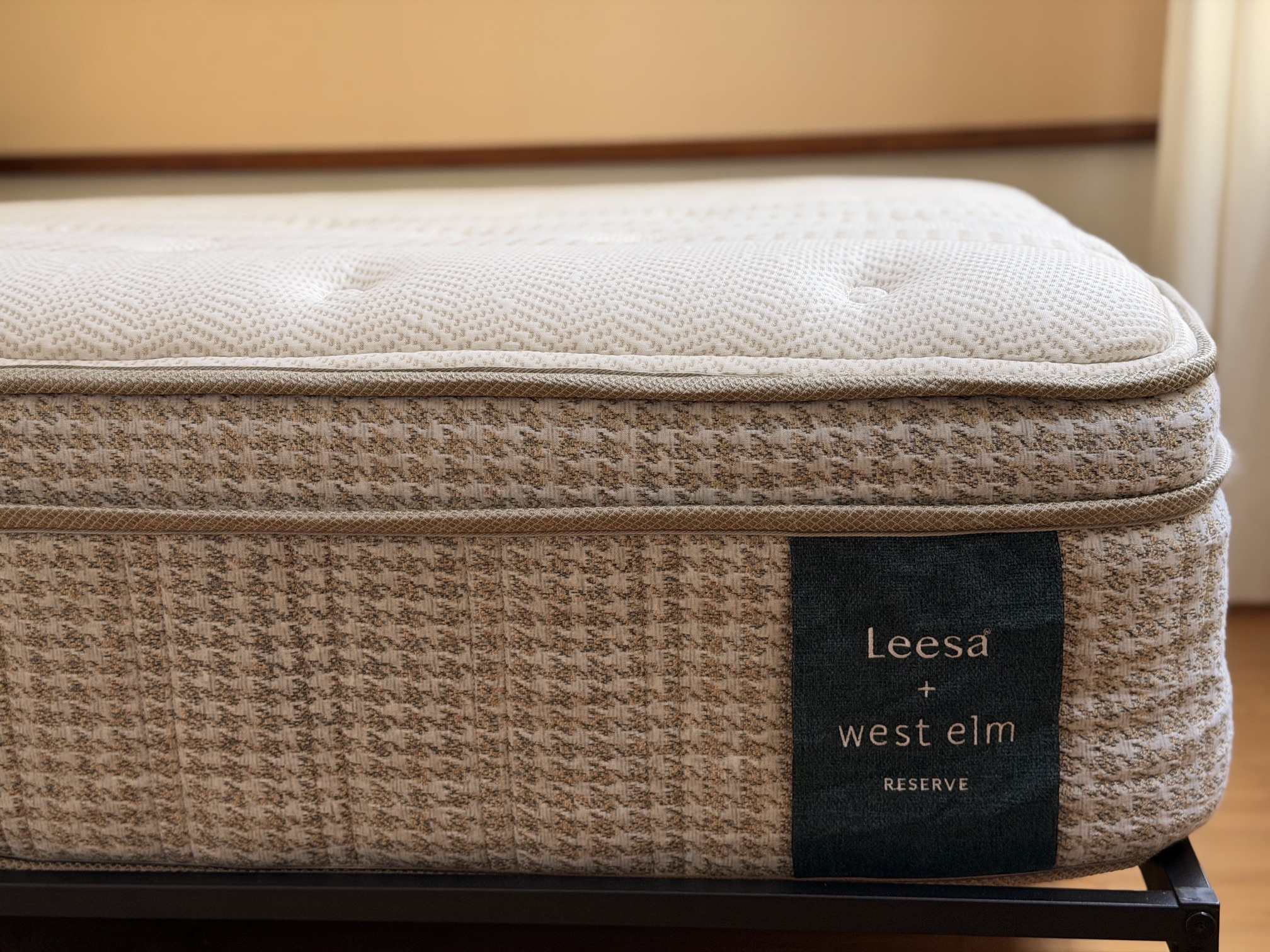
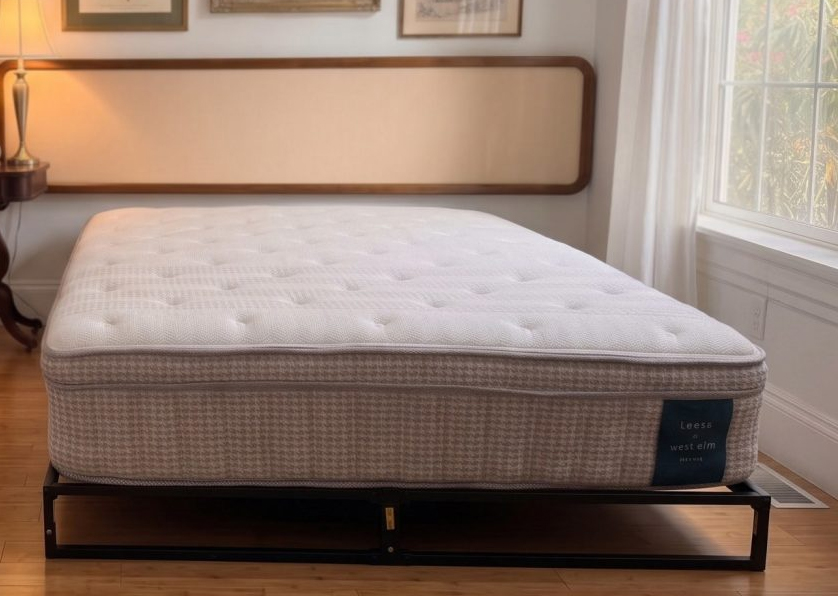
Thirteen inches, eight layers, two separate spring systems, up to 2,756 micro-springs stacked on up to 1,032 coils, five graphite strips and three separate certifications. It's a lot of apparatus to lie down on. Here it is top to bottom, including where the GreenFlex BioFoam Leesa rebuilt the range around actually sits.
1.5 inches of GreenFlex BioFoam
The layer that changed this year. A 3 lb density plant-based foam made in-house, certified under the USDA BioPreferred Program at 26% biobased content, swapping petroleum-derived polyols for renewable plant-based ones that don't compete with the food supply. It does the cradling, and its open-cell structure vents heat rather than holding it.
What the Reserve Costs
These prices were checked in August 2026, with the discount Leesa was running at the time. Leesa discounts often, so what you pay is usually below the list price, and if a sale ends before you've decided another one tends to come along. Offers change without notice.
| Option | Price |
|---|---|
| Twin | $1,799 |
| Twin XL | $1,979 |
| Full | $2,429 |
| QueenPopular | $2,769 |
| King / Cal King | $3,299 |
Good to Know
Leesa Reserve FAQ
The questions worth answering before spending this much on a mattress.
Does the Leesa Reserve come in different firmness levels?
Not any more. As of August 2026 the Reserve comes in one firmness, Leesa's signature medium. Older reviews listing soft, medium and firm are describing the previous version, which was also an inch taller at 14 inches. If you need a soft or a firm build, the current Reserve can't give you one. That's the thing to know before ordering.
What is GreenFlex BioFoam, and is it actually better for the environment?
GreenFlex is Leesa's own plant-based foam, developed in-house and rolled out across the range in June 2026. It swaps a portion of the petroleum-derived polyols in conventional foam for renewable plant-based ones, and it's certified under the USDA BioPreferred Program at 26% biobased content — a partial swap, third-party verified rather than self-declared. The plant inputs don't compete with the food supply, and making the foam in-house cuts transport emissions.
Does the Leesa Reserve sleep hot?
Not for me, and I'm a hot sleeper. Overheating wakes me up on a bad mattress, and this one has kept me cool, which isn't what this much dense foam usually does. Leesa built against the problem on purpose: five graphite SteadyCool strips directly under the quilt to conduct heat off the surface, an open-cell GreenFlex layer designed to vent, and two separate spring layers keeping air moving through the middle. Two weeks in August isn't a whole summer, so I'll revisit this after a few months.
How long does the Leesa Reserve take to off-gas?
Expect some new-foam smell on unboxing, as with any compressed foam mattress. Anyone who's ever unboxed one knows the smell. It fades over the first few days. Unbox in a well-aired room and give it a day before you sleep on it, and that handles most of it. All the foams are CertiPUR-US certified and the mattress is GREENGUARD Gold certified for low chemical emissions, so it's a smell question, not a safety one.
Is the Leesa Reserve the same thing as the Leesa + West Elm mattress?
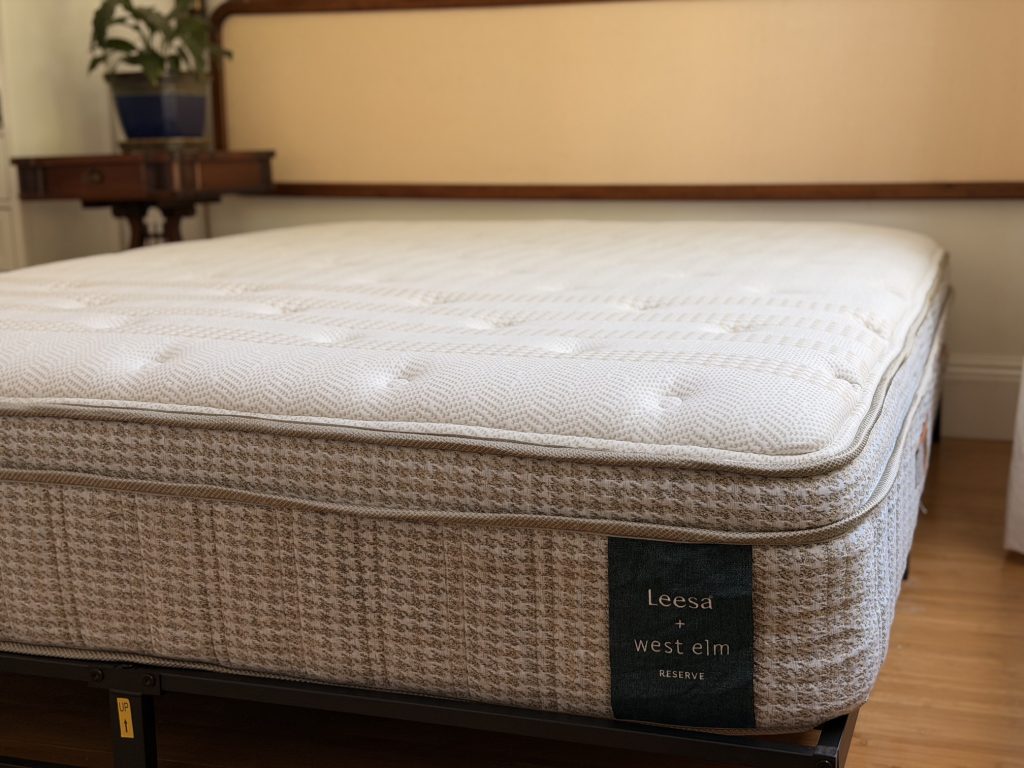
Yes. The Reserve is Leesa's collaboration with West Elm, and the label sewn to the side of the mattress reads 'Leesa + west elm Reserve'. It sits at the top of Leesa's own range rather than in a separate West Elm line, and it now carries GreenFlex BioFoam like the rest of the collection, apart from the Kids and Oasis models.
Is the Leesa Reserve worth the price?
It's a lot of money and it earns most of it. Worth it if you hold on to a mattress for a decade, sleep on your side or your back, and would rather be cradled than have something springy underneath you. Poor value if you replace beds every few years, sleep on your stomach, or move around a lot at night.
Should You Buy the Leesa Reserve?
Buy it if you want a mattress that feels soft when you lie down and still has your back at four in the morning. It does that better than any bed I've slept on, and the GreenFlex rebuild makes it a little kinder to the planet without costing you anything in comfort. Skip it if you move around a lot at night, sleep on your stomach, or don't want to spend this much on a mattress. Either way, use the whole 120 nights. That's four months to change your mind about something you lie on every day, and at this price you should take all of it.